
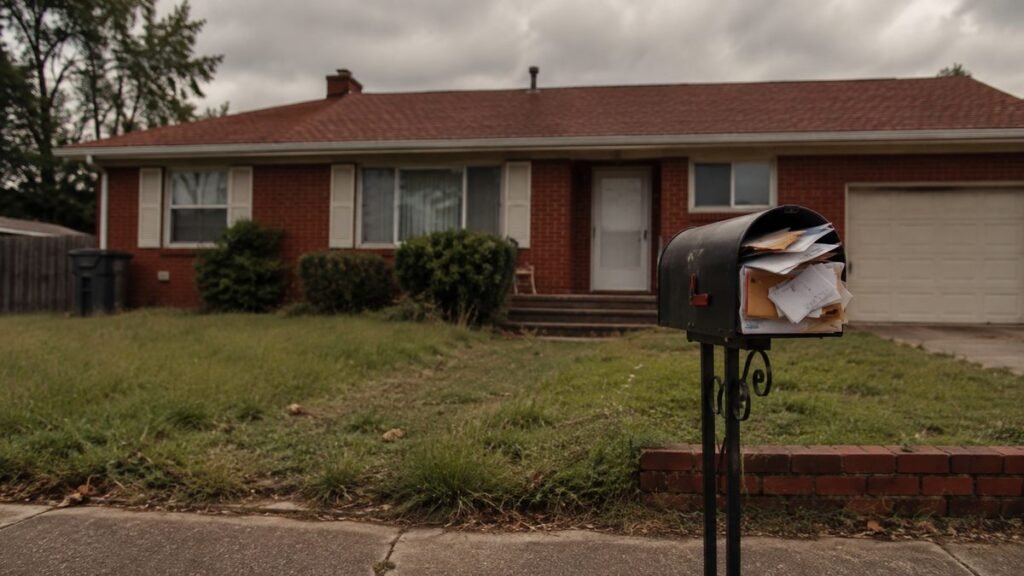
Short answer: Real estate skip tracing is finding the current contact details of a property owner who is not living at the property. It works well on absentee owners and badly on lists you have not cleaned first.
- Trace the list you will actually work, not the biggest list you can buy.
- Clean before you trace. Duplicates and bad addresses are billed the same as good records.
- Absentee owners are the core use case. If the owner lives there, you already know where they are.
- The legal risk sits in the outreach, not the lookup.
Skip tracing came out of debt collection, where the job was locating someone who had deliberately moved on. In real estate the target is rarely hiding. They are an ordinary person whose property is not where they live, and whose tax bill goes somewhere you can find.
That distinction matters, because it explains why real estate skip tracing works best on some lists and is close to pointless on others.
Contents
Which lists are worth tracing
| List | Worth tracing? | Why |
|---|---|---|
| Absentee owners | Yes | The core case. Mailing address differs from the property, so the phone is genuinely unknown. |
| Probate and deceased owner | Yes | You need heirs and the personal representative, which is exactly what relative data solves. |
| Pre foreclosure | Usually | Owners often move before the process finishes, so recorded addresses go stale fast. |
| Tax delinquent | Usually | Long delinquency correlates with the owner having moved on. |
| Owner occupied, current | Rarely | You already know where they are. Knock or mail. |
| Bought raw and unfiltered | No | You will pay to trace duplicates, businesses and people who sold two years ago. |
The order that saves money
Most people buy a list, trace all of it, then start working it. Reversing two steps changes the economics substantially.
- Pull and filter to the criteria you will genuinely act on. Equity, ownership length, property type, condition proxies.
- Deduplicate by owner rather than by parcel. One owner with six properties is one conversation, not six traces.
- Verify current ownership against recent recorder data. Tracing someone who sold last spring is pure waste.
- Mail first, where you can. Mailing needs only the tax address, which is free, and responders are worth far more than cold records.
- Trace the responders and the high equity remainder, not the whole file.
- Measure cost per conversation, and re-test providers every few months.
Deduplicating by owner rather than by property is the single biggest saving available, and almost nobody does it. Portfolio owners appear many times in every county list.
The cases that actually need skip tracing
- Deceased owner. Obituary plus relative data plus the probate docket. Slow, and these are frequently the best deals on any list.
- LLC owned property. Start with the secretary of state filing for the registered agent, then trace the human named there.
- Out of state owner. The classic absentee case and the one skip tracing handles best.
- Vacant property, mail returned. The mailing address is dead, which is precisely when you need the phone.
The number is the easy part. Calling it is the risk.
Skip tracing gets you a phone number. What you are allowed to do with it is a separate question, and it got harder in 2026.
In Coffey v. Fast Easy Offer (Ninth Circuit, 4 June 2026) the court revived TCPA claims over “we buy houses” calls and texts. The district court had thrown the case out on the theory that offering to buy a house is not a solicitation to sell anything. The Ninth Circuit disagreed, holding that the sender’s purpose matters, and that where unconverted leads are handed to a brokerage under a revenue share, the communication can be a telephone solicitation after all.
The practical consequence for wholesalers is direct. The old comfort that buy side outreach sits outside the TCPA is no longer safe in the Ninth Circuit, and the reasoning is available to plaintiffs elsewhere. If you skip trace a list and then blast it, you are relying on a defence that has just been narrowed.
- Skip traced numbers are overwhelmingly cell phones. That is the point of skip tracing, and it is also what raises the exposure.
- The National Do Not Call Registry still applies to telephone solicitations. Scrub against it rather than assuming your data provider did.
- What you do with dead leads matters. Coffey turned partly on referring unconverted sellers to a brokerage for a share of revenue. If your business does that, read the opinion with counsel.
- Consent is the safe path. Direct mail first, inbound response second, phone contact after that. Slower, and far more defensible.
What this data legally is, and is not
Skip tracing data sold to investors is almost always non-FCRA data. That is not a loophole, it is a category.
| Law | What it restricts | What it means for you |
|---|---|---|
| FCRA | Use of consumer report data for credit, insurance, employment and tenant screening decisions | You may not use investor skip trace data to screen a tenant or a buyer’s creditworthiness. Different product, different permissible purpose. |
| DPPA | Use of state motor vehicle record data | DMV sourced data has a restricted list of permitted uses. Marketing to homeowners is generally not among them. |
| GLBA | Non public personal financial information | Constrains what financial data a provider can resell and for what purpose. |
| TCPA | Calls and texts to the numbers you just found | The live risk. See the section above. |
Reputable providers make you accept a permissible use agreement before they release data. If a provider does not ask, that is a signal about the provider rather than a convenience.
Frequently asked questions
What is skip tracing in real estate?
Finding current contact information, usually phone numbers, for the owner of a property when the owner does not live there. It is used to reach absentee, probate, pre foreclosure and tax delinquent owners.
Which list should I skip trace first?
Absentee owners with meaningful equity, deduplicated by owner rather than by parcel. That combination has the clearest reason to sell and the highest chance the phone number is genuinely unknown to you.
Should I trace the whole list?
Usually not. Mail first where the tax address is good, then trace responders plus your highest equity non responders. That puts the spend behind people who have already shown interest.
How do I find the owner of an LLC?
Start with the secretary of state business filing, which names the registered agent and often a manager. Then skip trace that individual rather than the entity.
What about deceased owners?
Combine the obituary, the probate docket and relative data from a provider. The personal representative and their attorney are often the fastest route, and attorneys tend to answer.
Is it legal to skip trace a homeowner?
Locating an owner through lawful data sources is generally legal. The regulated questions are which data you use and for what purpose under FCRA, DPPA and GLBA, and what you then do under the TCPA.
The list is where most people waste their money
Tracing everything, calling everyone and converting nobody is the default path. Inside the free group we work through list selection, the order that keeps costs down and how to reach owners without creating legal problems. 1,100 wholesalers already in there. No cash, no credit, no license needed.
Join the free groupSources
Coffey v. Fast Easy Offer, LLC, No. 25-4066 (9th Cir. 4 June 2026)
Telephone Consumer Protection Act and National Do Not Call Registry rules
Fair Credit Reporting Act, Driver’s Privacy Protection Act, Gramm-Leach-Bliley Act
County assessor, recorder and probate record practice
This article explains common practice and is not legal advice. Contract law, disclosure duties and wholesaler licensing rules vary by state and change often. Have a real estate attorney licensed in your state review any agreement before you sign or use it.